
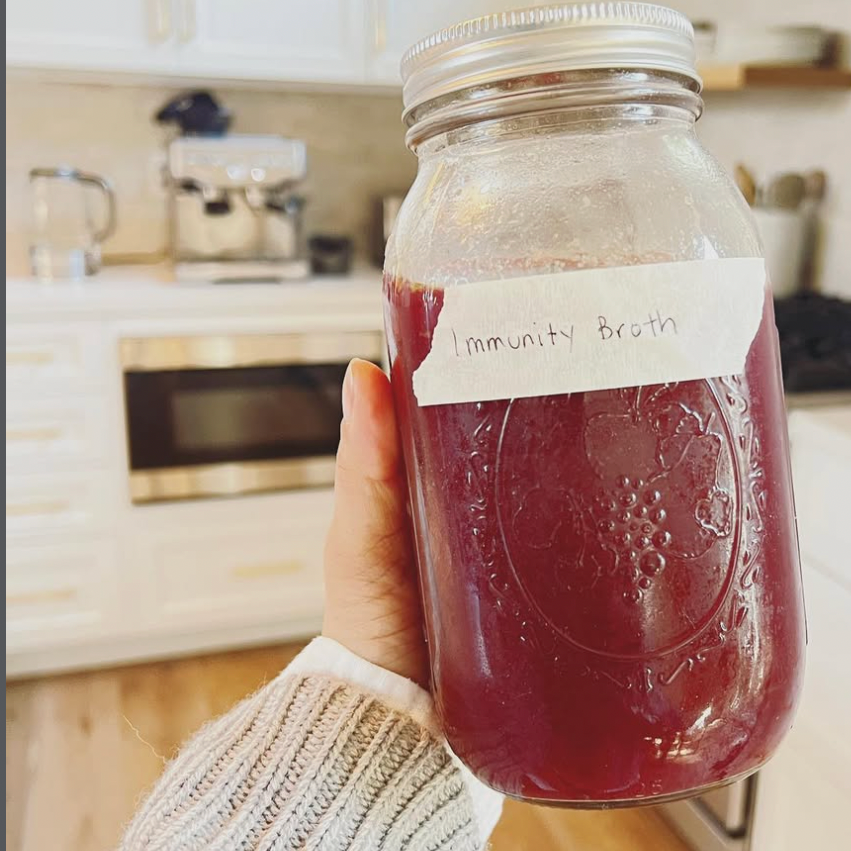
The Immunity Broth I Make When Everyone Is Getting Sick

There is a point every winter when I stop calling it bad luck and start calling it what it is: pattern recognition.
If you have a child under ten, you know the moment. The sniffles start circulating. Someone coughs at school pickup. A text comes through that begins with, “Just a heads up…” And suddenly, the question isn’t if someone is getting sick — it’s who’s next.
This is usually when I pull out the biggest pot I own and make my immunity broth.
Not because I think it makes me invincible.
Not because I believe food alone can outsmart germs.
But because over time, I’ve noticed something interesting: when I consistently support my immune system before I’m sick, I often don’t get as sick, or sometimes, not sick at all.
And yes, when that happens, it feels a little bit like having a superpower.
A very quiet, soup-based superpower.
This broth is something I return to again and again during winter. It’s warming, grounding, and deeply supportive , especially during Vata–Kapha season, when digestion can slow and the body benefits from foods that are easy to digest and gently stimulating.
In Ayurveda, immunity isn’t defined as never getting sick. It’s the body’s ability to resist and recover from imbalance. It’s about resilience, not perfection. When our systems are nourished and supported, we tend to bounce back faster and sometimes avoid the worst of it altogether.
This concept is closely tied to Ojas, the subtle essence associated with vitality, immunity, and overall strength. Ojas is built slowly through proper digestion, rest, nourishment, and consistency. Warm, grounding foods like this broth help protect and replenish Ojas during winter, when reserves can easily be depleted.
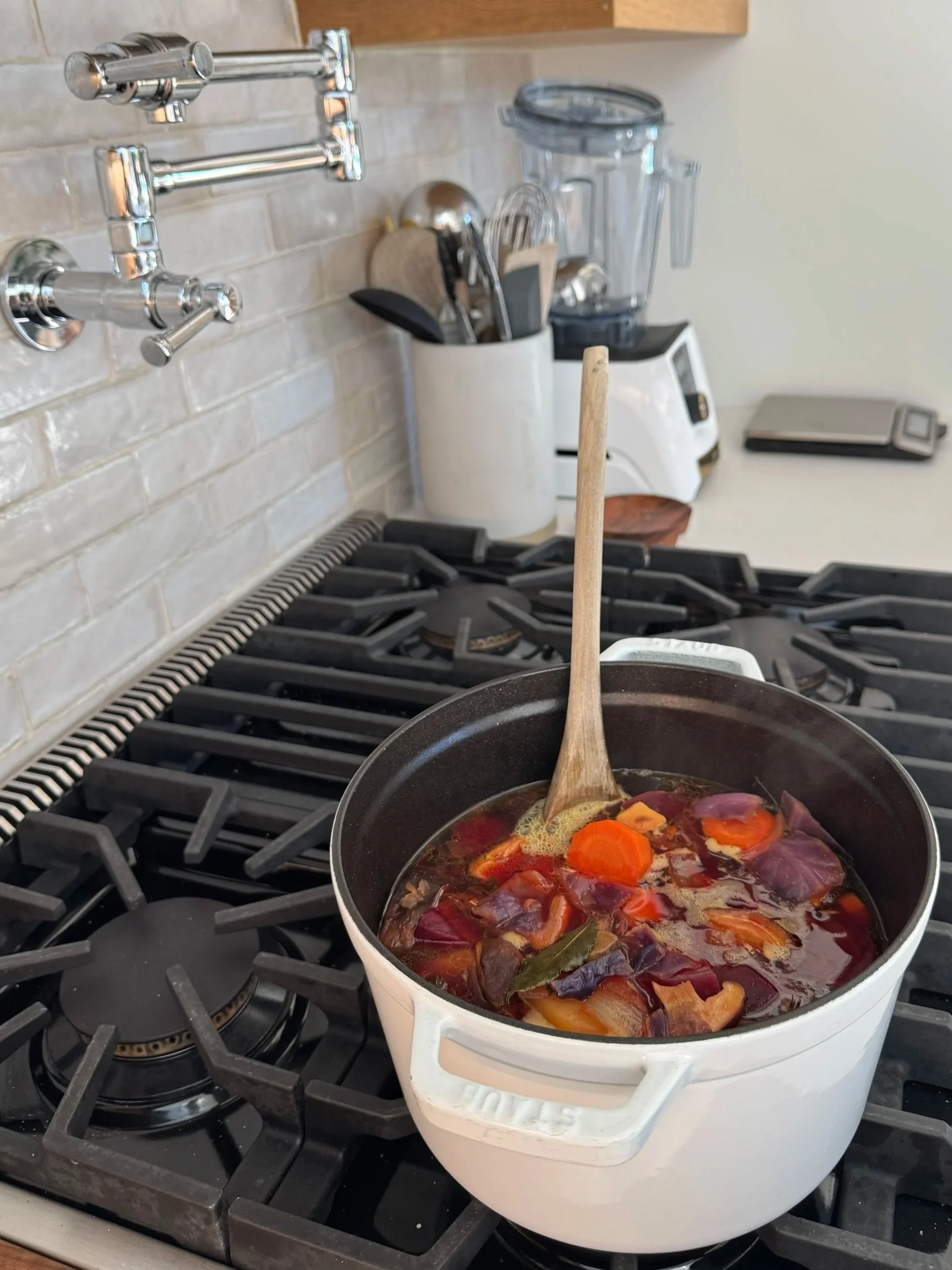
Winter Immunity Broth
Ingredients
1 tablespoon olive oil or avocado oil
1 yellow onion, chopped
2 leeks, cleaned and sliced (white and light green parts)
2–3 cloves garlic, smashed
1 medium sweet potato, peeled and cubed
1 medium beet, peeled and cubed
2 cups red cabbage, chopped
1 cup shiitake mushrooms, sliced (fresh or dried)
1–2 inches fresh turmeric root, grated (or 1 teaspoon ground turmeric)
½ teaspoon freshly ground black pepper
8–10 cups water or vegetable broth
1–1½ teaspoons sea salt, to taste
Optional: fresh ginger slice or a squeeze of lemon at the end
Instructions
Sauté the aromatics
In a large pot, warm the oil over medium heat. Add the onion and leeks with a pinch of salt. Cook for 5–7 minutes, stirring occasionally, until soft and fragrant. Add the garlic and cook for another 30 seconds.Build the broth
Add the sweet potato, beet, red cabbage, and shiitake mushrooms. Stir everything together, letting the vegetables warm through for a minute or two.Add spices + liquid
Stir in the turmeric and black pepper. Pour in the water or broth, making sure the vegetables are fully submerged.Simmer
Bring to a gentle boil, then reduce to a simmer. Cover and cook for 30–40 minutes, until all vegetables are very tender.Season and finish
Add salt to taste. If using, add a slice of ginger while simmering or a squeeze of lemon just before serving for brightness.Serve
Enjoy as a light soup, sip the broth on its own, or strain and drink warm throughout the day
what’s in the pot and why
This broth leans on a few gold-standard players:
Beets & sweet potato
Grounding and nourishing, helping rebuild strength when energy feels low.Red cabbage
Rich in antioxidants and supportive for overall cellular health — plus it gives the broth a deep, beautiful color that somehow makes it feel extra medicinal.Shiitake mushrooms
A longtime ally for immune support. Savory, satisfying, and quietly powerful.Onion & leeks
Warming, circulatory, and classic winter helpers. They support movement and digestion when things feel heavy.Fresh turmeric + black pepper
A time-tested duo for inflammation support and circulation. Turmeric gets most of the attention, but black pepper makes it work better.
Together, these ingredients support Agni, the digestive fire. In Ayurveda, strong immunity depends on strong digestion. When Agni is supported, the body is better able to assimilate nourishment and respond to stressors — including seasonal bugs.
We can’t stop every germ or pressure hose our life in hand sanitizer But there are a few preventative steps to support the body and make those long nights of coughing and cough syrup negotiations a little more manageable.
And on the weeks when everyone around you seems to be sick and we’re… not - we get to quietly celebrate with another bowl. Not smugly but gratefully.
Ok. Maybe a little smugly 😉
This isn’t about avoiding life. It’s about supporting the body’s ability to meet it. And sometimes, that really is enough